Koka Ninja House 甲賀流忍術屋敷


ni011-20080531_5063.jpg

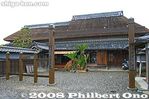
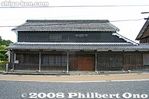
The world's only authentic ninja house still in its original location. Revolving doors, trap doors, and underground tunnels helped the ninja escape or hide from the enemy. They avoided direct combat as much as possible. Called Koka-ryu Ninjutsu Yashiki, this house was the residence of Mochizuki Izumo-no-kami, the leader clan of the Koga ninja. Located in Konan-cho, the former heart of the Koka ninja, popularly called Koga ninja. JR Konan Station on the Kusatsu Line is the closest train station. Special thanks to Takayuki Mochizuki (ninja descendant) for taking me here. Also see my YouTube video here.

67 files, last one added on Mar 27, 2010
Album viewed 82 times

Koka Ninja Village 甲賀の里 忍術村


nv020-20080531_5204.jpg

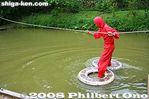
Koka, Shiga Prefecture is known historically as a town of the Koga ninja. (Correct pronunciation is "Koka.") As a theme park, the Koka-no-Sato Ninjutsu-mura or Koka Ninja Village offers a good tourist sampling of ninja in a hidden village of former ninja houses transplanted to this "village."

48 files, last one added on Feb 16, 2009
Album viewed 110 times

Minakuchi-juku and Minakuchi Castle 水口宿・水口城


mj202-20090419_3733.jpg

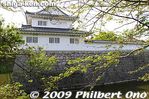
Following Tsuchiyama-juku, Minakuchi-juku was the fiftieth of the fifty-three stations of the Tokaido Road. The most prominent remnant is Minakuchi Castle. A moat, stone walls, and a reconstructed turret are all that remains. The turret serves as the Minakuchi Castle Museum. The original castle was built in 1634 as a rest place for shogun Tokugawa Iemitsu during his travels to and from Kyoto. But the shogun stayed at the castle only once. It later became the castle of the Minakuchi clan in 1682 headed by Lord Kato Akitomo. The old Tokaido Road in Minakuchi has a few other historical places. Short walk from Minakuchi Jonan Station on the Omi Railway Line.

123 files, last one added on Jul 04, 2009
Album viewed 7 times

Minakuchi Hikiyama Matsuri Festival 水口曳山祭


mh133-20090420_4256.jpg

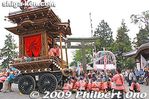
Held on April 19-20 in Koka, Shiga Prefecture, Japan, the Minakuchi Hikiyama Festival has ornate Hikiyama floats pulled through town. On the festival eve, the floats are lit up with paper lanterns from 7 pm and Minakuchi-bayashi festival music is played. On the 20th, at 9 am, the floats are paraded through the streets as they head toward Minakuchi Jinja Shrine (near Minakuchi Jonan Station). Portable shrines also make their way to the shrine. During midday, ceremonies are held at the shrine. At 2 pm, a procession of Chigo children and portable shrines leave the shrine.

137 files, last one added on Jul 04, 2009
Album viewed 6 times

Tsuchiyama Saio Princess Procession あいの土山斎王群行


so079-20090329_4238.jpg

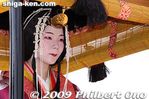
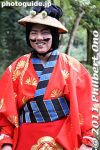
The Saio princess was an unmarried, young Imperial princess, often the Emperor's daughter, who was appointed (by divination) to be the High Priestess of Ise Grand Shrines in Mie Prefecture from the 7th to 14th centuries. For about 660 years, over 60 Saio princesses served at Ise Grand Shrines. The new Saio princess traveled from Kyoto to her Saiku palace near the Ise Shrine. The journey took 5 nights and 6 days, and passed through Tsuchiyama in Shiga Prefecture. Held on the last Sunday in March, this festival reenacts the Saio Gunko procession in Tsuchiyama to Tarumi Tongu which was one of the five palaces where the Saio lodged along the way.

176 files, last one added on Apr 01, 2009
Album viewed 13 times

Kenketo Matsuri Festival and Odori Dance ケンケト祭・踊り


ke231-20100503_0094.jpg

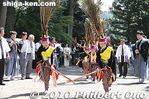
Held on May 3 by Tagi Jinja Shrine (龍樹神社) in Tsuchiyama, the Kenketo Odori is a dance performed by eight boys aged 7 to 12. The dance was originally started to ward off calamities. The boys wear tall peacock feathers on their heads. From Kibukawa Station (JR Kusatsu Line and Ohmi Railways), catch the Aikuru Bus and get off at Higashi Maeno. The shrine is a short walk toward the river. Also see my video at YouTube.

74 files, last one added on Jun 06, 2010
Album viewed 20 times

Shigaraki 信楽


sg041-20081013_1719.jpg

One of Japan's renown and historical centers for pottery, Shigaraki's heart is the Shigaraki Ceramic Cultural Park. A large, pleasant park boasting ceramic art, kilns, and museums. A great time to visit Shigaraki is during the Shigaraki Pottery Festival and Ceramic Art Market in mid-Oct. Also visit the ancient ruins of Shigaraki Imperial Palace. More about Koka here.

116 files, last one added on Sep 30, 2009
Album viewed 37 times

Tsuchiyama-juku 土山宿


ts018-20080530_5003.jpg

Tsuchiyama-juku in Tsuchiyama-cho was the forty-ninth of the fifty-three stations of the Tokaido Road, following Sakanoshita-juku in Mie. It is right after Suzuka Pass on the Suzuka mountains, one of the two most difficult sections of the Tokaido. Travelers thus were happy to see Tsuchiyama. Nicknamed "Ai no Tsuchiyama," the town is working hard to preserve its old buildings. The Tsuchiyama-juku Honjin where Shogun Tokugawa Iemitsu and Emperor Meiji lodged is still intact and well maintained. The Tsuchiyama Tokaido Museum is also a major attraction. Special thanks to Uno Yoshinobu who was my guide in Tsuchiyama.

112 files, last one added on Jun 06, 2008
Album viewed 24 times

JR Koka Station 甲賀駅


ks020-20080531_5271.jpg

Check out Koka Station's new station building opened in Nov. 2005. It resembles a farmer's warehouse. But what makes it unique are the seven wall murals depicting ninja. The paintings are designed to look three-dimensional and interactive so you can pose within the painting for picture-taking.

17 files, last one added on Jun 02, 2008
Album viewed 10 times


9 albums on 1 page(s)