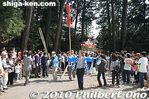
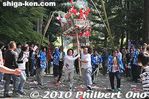
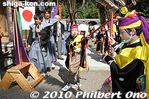
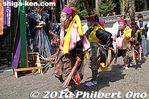
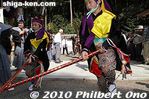
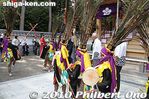
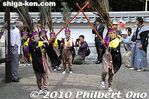
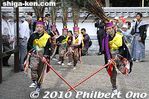
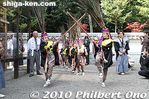
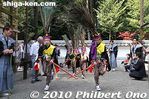
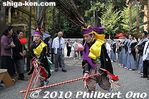
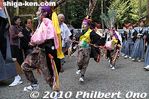
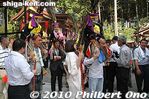
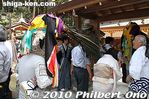
Kenketo Matsuri Festival and Odori Dance ケンケト祭・踊り
|
|
|
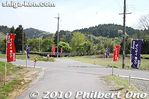
Held on May 3 by Tagi Jinja Shrine (龍樹神社) in Tsuchiyama, the Kenketo Matsuri Festival is highlighted by the Kenketo Odori Dance. The road to the shrine is marked with festival banners.
|
|
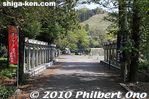
Path to the shrine. The shrine is in Maeno in Tsuchiyama. MAPThis Kenketo Odori Dance has been inscribed as a UNESCO Intangible Cultural Heritage in 2022 as one of Japan's furyu-odori (風流踊) ritual dances.
|
|

Large sacred tree.
|
|
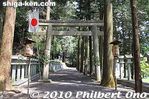
Torii to Tagi Jinja.
|
|
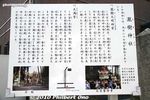
About Tagi Shrine. The shrine was established to protect the area from flooding by two nearby rivers. Thus it is near the river.
|
|
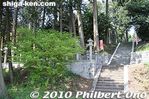
Steps going up to the shrine. The Kenketo procession will go up these steps to enter the shrine.
|
|
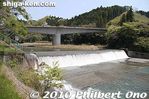
Behind the shrine is Yasu River which apparently often flooded the area in the old days. 野洲川
|
|
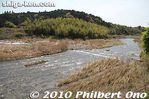
Yasu River.
|
|
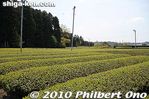
Tagi Shrine is amid tea fields. Tsuchiyama is a major tea-producing area.
|
|
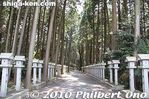
Another path to Tagi Jinja Shrine in Tsuchiyama, Shiga.
|
|
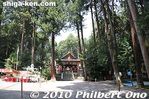
This is the area (called baba 馬場) where the Kenketo Odori will be performed. The boys will proceed up this path toward the shrine, while a crowd will watch on both sides.
|
|
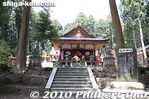
Tagi Shrine's closest bus stop is Higashi Maeno. Buses run from Kibukawa Station.
|
|
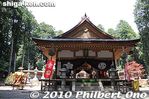
Haiden Hall was rebuilt anew in 2005.
|
|
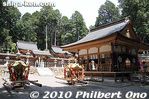
Haiden Hall on the right and children's mikoshi on the left.
|
|
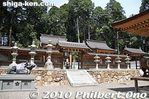
Honden Halls beyond the fence.
|
|
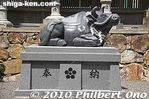
Bull statue
|
|
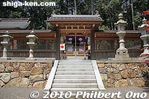
Tagi Jinja actually consists of two shrines. One is this Tagi Daimyojin-no-Miya Shrine mainly dedicated to a god called Haya-akitsu-Hiko-no-Mikoto (速秋津比古之命) and Haya-akitsu-Hime-no-Mikoto (速秋津比 之命). 龍樹大明神宮
|
|
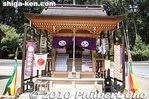
Tagi Daimyojin-no-Miya Shrine is dedicated to the water god, for protection against floods. Long ago, nearby rivers often flooded this area. 龍樹大明神宮
|
|
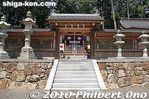
The other shrine is Tenmangu dedicated to Sugawara Michizane, god of scholarly learning. Popular with students. 天満宮
|
|
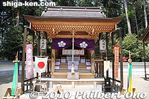
Tenmangu Shrine in Tsuchiyama, Shiga. 天満宮
|
|
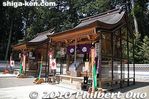
The main halls of both shrines: Tagi Daimyojin-no-Miya on the right and Tenmangu on the left. In 2005, both these shrine buildings were rebuilt anew. They look very new and nice.
|
|

My YouTube video of the Kenketo Odori Festival.
|
|
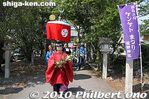
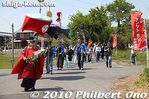
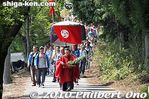
At the Otabisho in Maeno at around 1 pm, they hold a ceremony. Then the Kenketo procession, led by the shrine priest, head for Tagi Shrine.
|
|
|

Kenketo dancers, wearing peacock feathers, are carried on shoulders.
|
|
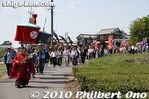
Kenketo procession passing by tea field.
|
|
|
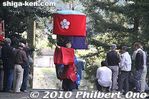
After going up the steps, the procession reached the shrine at about 1:45 pm.
|
|
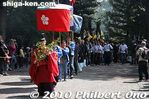
Behind the shrine priest are three festival umbrellas. 三基の傘鉾(日、月、矢)
|
|
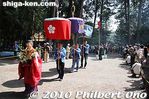
After the festival umbrellas, the young boys started their kenketo odori dance on the baba area. 馬場踊り
|
|
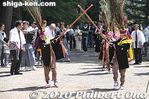
Kenketo Odori is a dance performed by eight boys aged 7 to 12. The dance was originally started to ward off calamities. The boys wear tall peacock feathers on their heads.
|
|
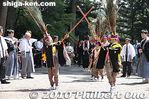
They dance to live music with drums, bell, and flute. The Kenketo Odori dance of Tagi Shrine is a National Intangible Folk Cultural Property. 国選択無形民俗文化財
|
|
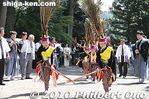
Kenketo Odori Dance at Tagi Jinja Shrine in Tsuchiyama, Shiga Prefecture.
|
|
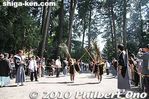
They perform the baba odori kenketo dance at the baba area.
|
|
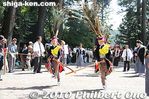
Shrine parishioners from three districts (Maeno, Iwamuro, and Tokuhara (前野、徳原と甲賀町岩室) around the shrine participate in the Kenketo Matsuri. Each district takes turns providing the boys who dance each year.
|
|
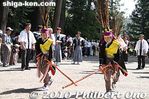
Kenketo Odori dance at Tagi Shrine, Tsuchiyama, Shiga.
|
|
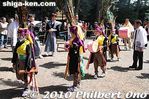
Besides the two baton twirlers at the front, there are these boys who play the drums and bell. They just danced across the baba once and stopped.
|
|

Up they go on human shoulders.
|
|

The kenketo dancers are put on men's shoulders whenever they are not dancing.
|
|

Kenketo dancer, Shiga
|
|

Kenketo dancers wearing peacock, pheasant and other bird feathers. Their feathered cap is called shagama. シャガマ
|
|
|
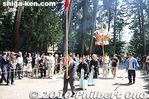
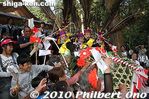
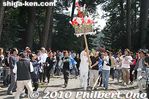
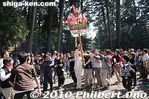
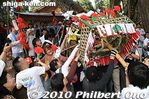
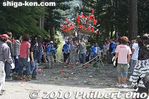
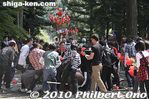
The next part of the festival featured numerous hanagasa flower umbrellas stuffed with little goodies.
|
|
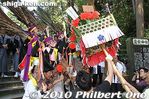
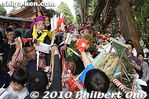
The first hanagasa went directly to the kenketo dancers. They pulled out the little sticks attached with things like towels, gloves, and maybe some cash.
|
|
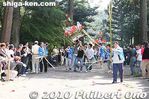
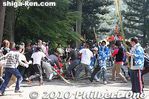
The fun part of the festival was when the hanagasa is offered to the crowd who fight over the spoils of the flower umbrella.
|
|
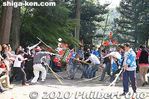
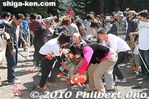
They knock down the flower umbrella and people rush in to grab something. They repeated this several times. This part of the festival is called Hanabai (花ばい).
|
|
|
|
|
|
|
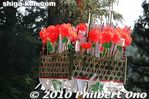
Once in a while, a flower umbrella was dedicated only to the kenketo dancers so it went directly to them. There are 20 flower sticks on these flower umbrellas.
|
|
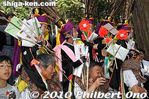
These kenketo dancers got a lot of goodies. They deserve it since they practiced hard for the dance.
|
|
|
|
|
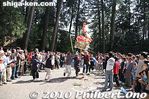
This flower umbrella came all the way to where I was.
|
|
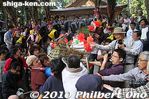
It's a real frenzy. I managed to pick up a plastic flower.
|
|
|
|
|
|
|
|
|
|
|
|

Kenketo dancer and his reward.
|
|
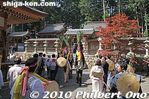
The boys were then taken to the shrine.
|
|
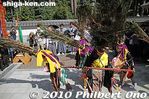
First, in front of Tagi Daimyojin-no-Miya Shrine, they danced and then danced around the shrine building a few times.
|
|
|
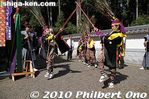
Kenketo dancers dancing around Tagi Daimyojin-no-Miya Shrine.
|
|
|
|
|
|
|
|
|
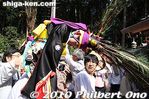
The boys were then taken to the other shrine.
|
|
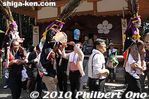
The boys are taken to Tenmangu Shrine.
|
|
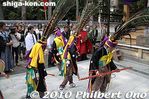
They danced in front of Tenmangu Shrine, then danced around the shrine a few times.
|
|
|
|
|
|
|
|
|
|
|
|
|
|
|
|
|
|
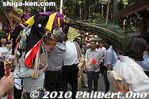
Due to the tall peacock feathers, the boys have to put their head down when going through the gate.
|
|
|
|
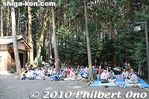
Festival spectators
|
|
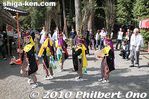
They dance again in front of the shrine office. 社務所前で宮踊り
|
|

Then they took a break and most people left. After the break at 4 pm, they danced again at the baba and went to the Otabisho near Yasu River where a ceremony was held. The portable shrines are also carried around.
|
|
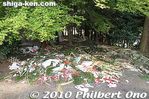
Festival waste material.
|
|

Kenketo Odori poster. The word "kenketo" is written in katakana, but the kanji is written as 献鶏頭 which is not accurate in meaning. It was just made up. No one is sure what kenketo means in Japanese.
|
|
|
|
|
|