|
|
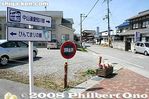
Echigawa-juku was the sixty-sixth station or post town (shukuba) of the sixty-nine stations on the Nakasendo Road. It is the sixth Nakasendo station in Shiga (following Takamiya-juku in Hikone), and one of ten Nakasendo stations in Shiga.In front of Echigawa Station, a sign point the way to Echigawa-juku (go right).
|
|
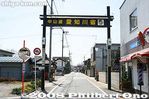
Entrance to Echigawa-juku at the northern end. Echigawa-juku was the sixty-sixth station or post town (shukuba) of the sixty-nine stations on the Nakasendo Road. Map
|
|
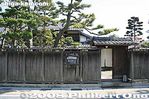
This is a high-class ryotei restaurant called Omi Shonin-tei (近江商人亭). Built in the 1920s, it used to be an Omi Merchant's second home who sold hemp cloth.This is also one location where the film Idai Naru, Shurararabon (偉大なる、しゅららぼん The Great Shu Ra Ra Boom) was filmed. The Natsume family's dojo scene.
|
|
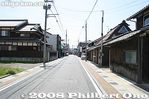
Nakasendo in Echigawa-juku
|
|
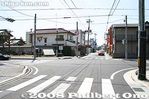
Large intersection has an Echigawa-juku monument.
|
|
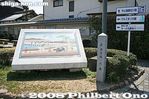
The street corner has a pocket park for an Echigawa-juku monument showing an ukiyoe print of the town. A stone marker also points the way to Takamiya-juku.
|
|
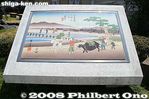
The ukiyoe print by Hiroshige shows a bridge across Echigawa River. It was toll-free (Muchin-bashi).
|
|
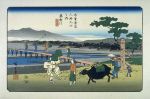
Hiroshige's woodblock print of Echigawa-juku (66th post town on the Nakasendo) from his Kisokaido series. On the left across the river is Mt. Kannonji (Kinugake).
|
|
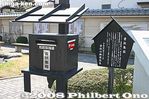
Meiji Period-style mail box. It's a real mail box so you can deposit your mail here.
|
|
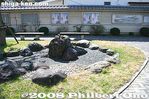
Pocket park in Echigawa-juku.
|
|
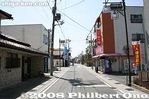
Heading south on the Nakasendo in Echigawa-juku.
|
|
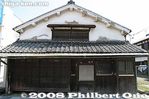
Traditional-style building
|
|

Marker indicating that St. Shinran, founder of the Jodo Shinshu Buddhist Sect, once stayed at this temple.
|
|
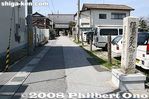
Way to Homanji temple where St. Shinran once stayed.
|
|
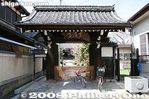
Gate to Homanji temple.
|
|
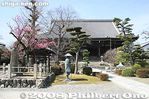
Homanji temple Hondo hall in Echigawa-juku, Shiga. 宝満寺
|
|
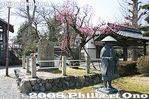
Statue of St. Shinran (1173-1263) in front of the plum tree which he planted. The temple also has a scroll written by Shinran.
|
|

While traveling, St. Shinran was unable to cross the Echigawa River since there was a flood. So he stayed at this temple temporarily. During that time, he planted a plum tree which bloom red plum blossoms.
|
|

St. Shinran statue and plum tree.
|
|
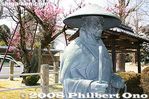
The plum tree blooms in March.
|
|
|
|

Homanji Hondo
|
|
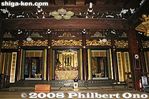
Inside Homanji Hondo main hall in Echigawa-juku, Shiga Prefecture
|
|
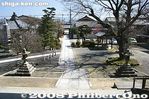
View from Hondo hall.
|
|
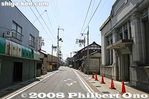
Some modern buildings along the Nakasendo in Echigawa-juku
|
|
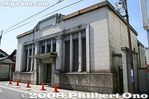
Looks like a former bank building.
|
|
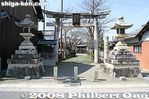
Hachiman Jinja Shrine in Echigawa-juku, Shiga
|
|
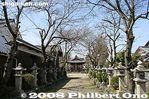
Way to Hachiman Shrine.
|
|
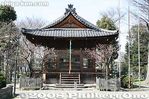
Hachiman Jinja Shrine, Echigawa-juku
|
|
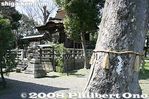
The shrine has ties to Prince Shotoku Taishi who hid here from an enemy during a war. In appreciation, he donated rice paddies to the shrine.
|
|
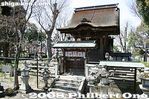
Hachiman Jinja Shrine Honden main hall is a Shiga Prefecture Cultural Property.
|
|
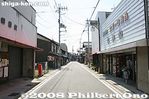
Shops along the Nakasendo
|
|
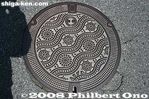
Manhole in Echigawa-juku, Shiga, with a temari (thread ball) design.
|
|
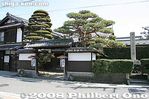
Another famous building remaining in Echigawa-juku. This is the Takeheiro restaurant where Emperor Meiji once stayed.
|
|
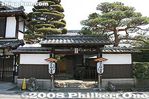
Entrance to Takeheiro. It's not open to the public unless you want to dine there. 竹平楼
|
|
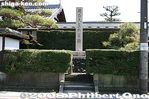
Stone monument at Takeheiro indicating that Emperor Meiji was here.
|
|
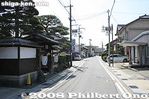
Takeheiro on the left, along the Nakasendo Road in Echigawa-juku, Shiga.
|
|
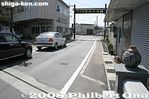
Toward the south end of Echigawa-juku. Bridge has a temari decoration.
|
|

Temari decoration on bridge.
|
|
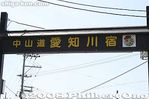
South end gate of Echigawa-juku.
|
|
|
|

