Tomioka Hachimangu Shrine 富岡八幡宮


th015-IMG_3077.jpg

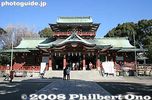
Near Monzen-Nakacho Station on the Tozai subway line, the shrine is the heart of Fukagawa. The shrine is said to have had its beginnings in 1627 when a prince from Kyoto enshrined a statue of the deity Hachiman on a small island called Eitai-jima near Fukagawa. The local Fukagawa community soon started worshipping this deity. By 1651, it became a major shrine in Edo's shitamachi or merchant's quarters. The shrine also has historical ties to sumo, makred by the Yokozuna Rikishi Monument (Yokozuna Rikishi-hi) and the Ozeki Rikishi Monument (Ozeki Rikishi-hi).

61 files, last one added on Feb 24, 2008
Album viewed 9 times

Fukagawa Hachiman Matsuri Festival 深川八幡祭り


090-IMG_5564.jpg

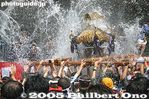
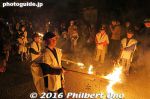
The full-scale version (Hon-matsuri) of this festival is held every three years by Tomioka Hachimangu Shrine near Monzen-Nakacho Station on the Tozai Line. These photos show the festival's climax on the last day of the festival when over 50 portable shrines are paraded along the streets amid splashing water. It is the Rengo Togyo or Joint Procession of Portable Shrines. More photos are at PhotoExposure. Also see the video at YouTube and water truck video at YouTube.

116 files, last one added on Apr 24, 2007
Album viewed 26 times

Kiba Kakunori Log Rolling 木場の角乗


039-IMG_0298.jpg

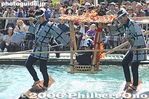
In mid-Oct. at Kiba Park, the local traditional folk entertainment is performed. Kiba Kakunori is square log rolling. They do all kinds of tricks while rolling on square (not round) logs. This is followed by Kiba Kiyari which is a workman's chant, the Fukagawa Tekomai Geisha, and Fukagawa Chikara-mochi which are strongman stunts using bales of rice. Also see the video at YouTube.

89 files, last one added on Feb 21, 2009
Album viewed 3 times

Kameido Wisteria Festival 亀戸藤まつり


014_8812_JFR.jpg

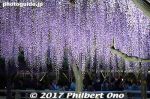
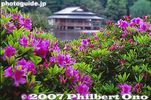
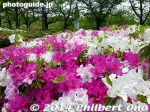
Kameido Tenmangu Shrine in Koto Ward, Tokyo is most famous for wisteria which bloom during late April to early May. These pictures were taken in various years, mainly in 1997, 2004, and 2005.

27 files, last one added on May 01, 2005
Album viewed 7 times

Kameido Tenjin Chrysanthemum Festival 亀戸天神菊まつり


022-IMG_2070.jpg

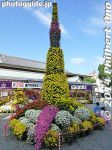
Held every autumn, the Chrysanthemum Festival (Kiku Matsuri) at Kameido Tenjin Shrine displays many exotic and pretty varieties of this flower. They can be shaped and trimmed in fantastic ways. Very nice when you go and see them during shichi-go-san in Nov. when 7-year-old and 3-year-old girls and 5-year-old boys come to shrine in kimono.

45 files, last one added on Dec 11, 2007
Album viewed 9 times

Kameido Tenmangu Shrine 亀戸天満宮


004_913Feb10.jpg

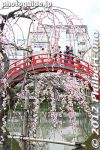
Made famous by woodblock prints from the Edo Period, Kameido Tenmangu Shrine (also called Kameido Tenjin Shrine) is in Kameido, Koto Ward, Tokyo. It is dedicated to Sugawara Michizane, a scholar of the Heian Period (794-1185) and now worshipped as a god of learning. Many students hoping to pass school entrance exams come to pray here. Includes photos of plum blossoms and the annual chrysanthemum festival.

19 files, last one added on May 02, 2005
Album viewed 5 times

Usokae Shinji Bullfinch Exchange うそ替え神事


001_120_2079.jpg

The Usokae Festival is held every January at the Kameido Tenmangu Shrine. "Uso" means bullfinch, and "kae" means to change. The bullfinch is a symbol of good luck, and uso can also mean "lie." People replace their wooden uso dolls believing that the previous year's bad luck was a lie, to be exchanged for good luck in the new year with the new uso doll.

10 files, last one added on May 02, 2005
Album viewed 2 times

Kiyosumi Teien Gardens 清澄庭園


028-9320-12.jpg

Opened to the public in 1932, the garden was built and developed by several owners starting with Kinokuniya Bunzaemon, a successful Edo-Period merchant. Iwasaki Yataro, the founder of the Mitsubishi Zaibatsu, acquired the estate in 1878 and developed the garden with a pond and famous stones brought from all over Japan. It is a very green garden. Near Kiyosimi-Shirakawa Station on the Oedo and Hanzomon subway lines.

50 files, last one added on May 03, 2007
Album viewed 8 times

Fukagawa-Edo Museum 深川江戸資料館


023-IMG_2830.jpg

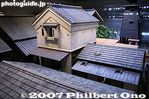
The Fukagawa-Edo Shiryokan Museum recreates an Edo-Period neighborhood in Saga-cho, Fukagawa with life-size buildings from that period. You can enter the rooms and see various furniture and implements used in those days by the common people.

29 files, last one added on May 03, 2007
Album viewed 16 times

Haiku Poet Matsuo Basho 松尾 芭蕉のゆかり


f065-IMG_2782.jpg

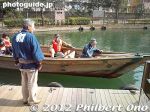
Japan's most famous haiku poet, Matsuo Basho (1644-1694), lived in Koto Ward from 1680 in his Basho-an Hut. He also embarked on his famous Okuno Hosomichi journey from Koto Ward. Statues of Basho and the Basho Memorial Museum have been built in Koto.

22 files, last one added on Feb 03, 2008
Album viewed 16 times

Sports in Koto Ward


ap121-20081228_2329.jpg

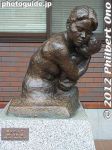
Koto Ward in Tokyo hosts various major sporting events like the Tokyo Marathon and bj-league pro basketball team Tokyo Apache.

0 files, 20 linked files, 20 files total
Album viewed 3 times


11 albums on 1 page(s)