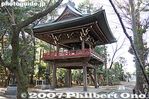
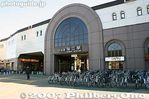
Komae's most prominent temple belongs to the Soto School of the Zen Sect near Komae Station. Affiliated with Eiheiji temple in Fukui and Sojiji temple. Official Web site.
22 files, last one added on Dec 17, 2007 Album viewed 55 times
A traditional thatched-roof house originally built in the late 18th century. It got in the way of the Odakyu train line (twice) near Komae Station so it was finally moved here in 2002. It was a farmer's home. Free admission. Open 9:30 am-4:30 pm (till 6 pm in July-Aug.). Closed Wed. and Thu. Address: Moto-Izumi 2-15-5 狛江市元和泉2-15-5, Phone: 03-3489-8981
13 files, last one added on Dec 17, 2007 Album viewed 30 times
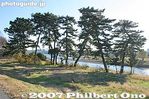
Komae fronts the Tama River along the border with neighboring Kawasaki in Kanagawa Prefecture. In spring, the cherry blossoms bloom along the riverside.
12 files, last one added on Dec 17, 2007 Album viewed 47 times
Komae's most popular shrine dedicated to the god of happiness. People hoping for a good marriage partner also pray here. The shrine was first built in 889 near Tama River. After a river flood washed away the shrine, it was moved to its present location in 1552. Located in Naka-Izumi 3-21-8. About a 12-min. walk from Komae Station. 狛江市中和泉3-21-8
7 files, last one added on Dec 17, 2007 Album viewed 30 times
Komae has numerous ancient tumuli, some say up to 100. However, most have been dismantled and only 13 are left. Kabuto-zuka is the city's largest tumulus, in the middle of a residential neighborhood. It is round, with a diameter of 38 meters, and height 6 meters. It is a Tokyo Prefectural Historic Place. Most other tumuli are on private property and permission is required to enter them.
7 files, last one added on Dec 17, 2007 Album viewed 30 times